

How to Choose the Right Floor Plan for Your New Home (And What Most Buyers Get Wrong)
Choosing a floor plan is one of those decisions that feels straightforward until you’re standing in a half-framed house realizing the bedroom configuration doesn’t actually work for your family. By then, of course, it’s too late to change. The good news is that this is a very avoidable problem — and the fix isn’t complicated. It just requires asking the right questions before you fall in love with a rendering.
We’ve helped a lot of buyers work through this decision over the years, and we’ve noticed that the buyers who end up genuinely happy with their homes five years in almost always did one thing right: they thought hard about how they actually live before they started comparing square footage. The ones who struggle are usually the ones who chose based on what sounded impressive, or what photographed well, or what matched some idealized version of their life that doesn’t quite match the day-to-day reality.
So let’s talk about what actually matters when you’re picking a floor plan — because it’s probably not what you think it is.
Start With How You Really Live, Not How You Want to Live
The most common floor plan mistake we see is aspirational thinking. A couple with no kids picks a five-bedroom home because “maybe someday.” A family that never entertains falls in love with a formal dining room that collects storage boxes within six months of move-in. A buyer who works from home every single day chooses an open-concept layout because the photos looked stunning — then spends the next three years taking work calls in the master closet.
The floor plan that works best for you is the one that fits your actual daily life, not the version of your life that sounds ideal at a dinner party. Before you look at a single plan, spend a few days paying genuine attention to how your household functions. Where does everyone naturally gather? Where do you each need privacy and quiet? Where do things pile up, and why? Where do arguments about space usually start?
Those patterns are the most useful data you have — more useful than square footage, more useful than feature lists, and far more useful than what your neighbor or your realtor tells you is “what everyone wants.”
The Bedroom Question Is More Complicated Than It Looks
Bedroom count is almost always the first specification buyers mention — “we need four bedrooms” — but it’s also the least specific part of the equation. Four bedrooms can mean wildly different things depending on how they’re arranged, where the primary suite sits, and how the secondary rooms relate to shared spaces and bathrooms.
Primary suite location is one of the most overlooked decisions in floor plan selection. A primary bedroom on the main floor versus the second floor changes daily life considerably, especially if you have young children, aging parents who might move in someday, or any mobility considerations worth planning for. A main-floor primary in a two-story home means you’re somewhat separated from the kids’ bedrooms at night — which is a feature for some families and a real drawback for others. Know which category you’re in.
Guest bedroom placement matters more than most buyers realize, too. A guest room positioned right next to the primary suite creates a very different dynamic than one at the opposite end of the house. If you host family regularly, think about how guests actually move through your home at 6am. Will they need quiet kitchen access while you’re still asleep? Will their bathroom share a wall with your bedroom? These are not abstract concerns — they’re real friction points that come up constantly in daily life once you’re actually living in the house.
A shared bathroom between two kids’ rooms works brilliantly for some families and creates daily conflict in others. Think about your specific children, their ages, and whether “share this space gracefully every morning” is a realistic expectation for them before you commit to that configuration.
The Open-Concept Conversation Nobody Has Honestly
Open-concept layouts have dominated new construction for the better part of two decades, and there are genuinely good reasons for it — they live large, let natural light flow through the home, and make casual entertaining feel natural and easy. If you host often and you have a family that gravitates toward the same space anyway, open-concept is probably right for you.
But open-concept has real trade-offs that deserve honest consideration, and the industry doesn’t always lead with those. Noise travels freely in an open floor plan. A television in the living room is fully present in the kitchen. A parent on a work call at the dining table is audible to someone trying to focus on homework ten feet away. Cooking smells — great and not so great — circulate through the entire main floor. These aren’t dealbreakers, but they’re real.
For buyers who work from home full-time, this is especially important. If your floor plan doesn’t include a dedicated, closeable office or a bedroom that can realistically serve that function without disrupting the rest of the house, you may find the layout working against you more than you expected. We’ve seen buyers absolutely love their homes in every other respect but quietly resent this one thing for years. It’s worth getting right up front.
Storage: The Specification That Determines Whether You Stay Organized
Every buyer eventually becomes a storage-conscious buyer. It usually happens about six months after move-in, when the boxes that were supposed to be “temporary” in the third bedroom have been there for three months and the kitchen cabinets are already overflowing. Linen closets, pantry space, garage depth, and attic access are the unsexy specifications that determine whether your home stays functional over time — and they get dramatically less attention in the buying process than they deserve.
When you’re reviewing floor plans, count the closets. Literally count them. Walk through the kitchen layout mentally and ask yourself where the items from your most crowded current cabinet would live. Look at the garage dimensions carefully — can two full-size vehicles actually fit in there with normal human belongings alongside them, or is it technically a two-car garage that realistically holds one car and a lot of stuff?
A floor plan with 200 extra square feet of living space but no functional storage is often a worse real-world choice than a slightly smaller plan that’s laid out thoughtfully. Square footage looks great in a listing description. A pantry you can actually use makes daily life noticeably better.
Thinking About the Next Ten Years — Without Overthinking It
Most buyers aren’t purchasing their forever home. They’re buying a home they’ll own for somewhere between seven and fifteen years, and the shape of their family and their needs will change during that time. That lifespan should influence the decision without driving you into over-building for hypothetical scenarios that may never materialize.
A young couple buying now may have one or two children in that home before they sell. A family with teenagers today is eight to ten years from the house being significantly quieter. An older buyer purchasing a two-story home now should at least consider whether the layout makes sense if knee problems make stairs difficult in a decade. None of this means picking a floor plan for some imagined future self — it means not choosing one that will feel obviously wrong in five years because you weren’t honest about where your family is heading.
The right floor plan isn’t the most impressive one or the one with the most square footage. It’s the one that fits how your household actually runs, every single day, for the years you’ll be living in it.
How GCC Custom Homes Approaches Floor Plan Design
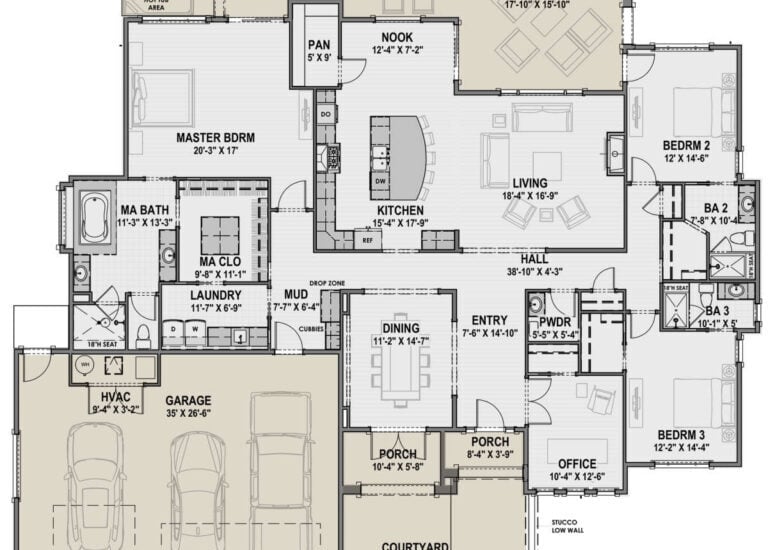
Our floor plan collection has been developed specifically for the buyers we work with — first-time buyers, growing families, and buyers relocating from more expensive Southern California markets who want real value without sacrificing livability. Each plan is designed with the practical questions above in mind: bedroom separation, storage integration, flexible spaces, and flow that makes sense in the real world, not just on paper.
If you want to talk through which plan might work best for your household, that conversation is exactly what our team is here for. There’s no single right answer — it depends on your family, your lifestyle, how you work, and how you live. Reach out here and we’ll work through it together.
If you’re still earlier in the process and weighing whether new construction is the right move at all, our Why Buy New? page lays out the case clearly. And when you’re ready to see what’s currently available in your price range, browse our available homes to get a sense of what your budget actually achieves.
The Short Version
Choose the floor plan that fits your life as it actually is — not the one that sounds most impressive or photographs best. Start with how you really live. Be honest about storage, privacy, and noise. Think clearly about where your family is heading over the next decade. And then find the plan that checks those real boxes rather than the generic ones.
A home that works for your family every single day — one where the layout supports how you actually move through your life — is worth considerably more than any collection of features you’ll use twice a year. Get that right and everything else follows.